Van der Vlugt Residence Sets Global Standard for Resilient Modern Architecture

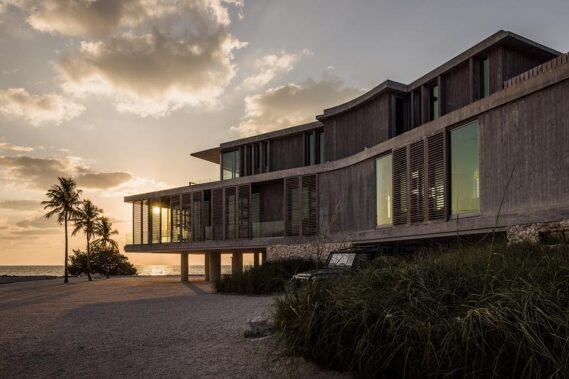
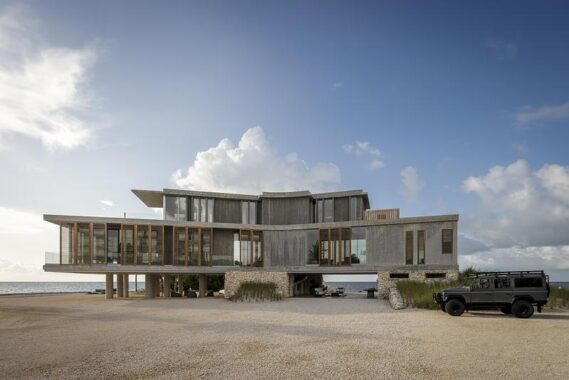
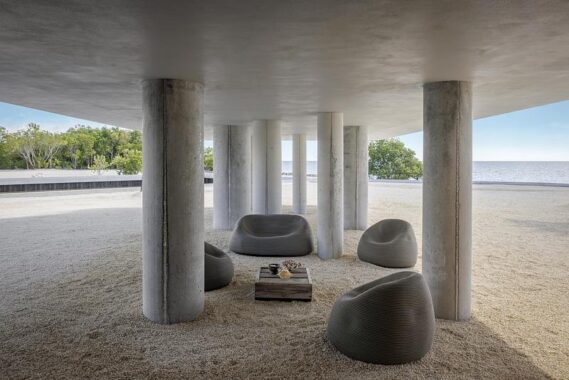
The structure is supported by a coral rock base and concrete cylinders.Photo credit: Kris Tamburello
The structure is supported by a coral rock base and concrete cylinders.
Photo credit: Kris Tamburello

The award-winning Van der Vlugt Residence by Miami-based firm STRANG has established itself as a global benchmark for resilient, environmentally responsive design. Recognized with the AIA Florida Award of Excellence, the AIA Miami Award, and as a finalist at the World Architecture Festival, it underscores innovative adaptation to climate challenges.
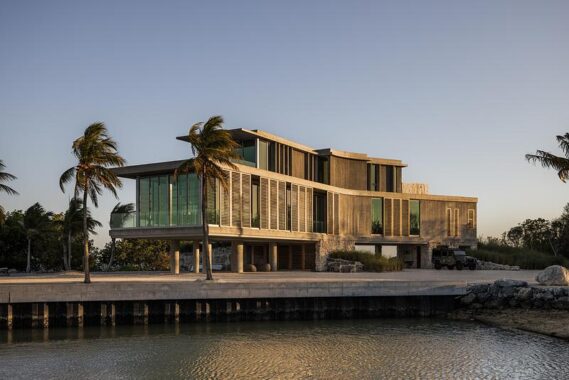
The Van der Vlugt Residence partially engages a pre-existing berm along a relatively untouched stretch of coastline.Photo credit: Ryan Lester, Architecture Sarasota
The Van der Vlugt Residence partially engages a pre-existing berm along a relatively untouched stretch of coastline.
Photo credit: Ryan Lester, Architecture Sarasota

This landmark project is the focus of the debut episode of Sarasota School: A Living Legacy, a documentary series celebrating Sarasota’s century-old architectural movement. Previewed during Open House Miami, the series highlights how the Van der Vlugt Residence embodies the principles of environmental adaptation, material experimentation, and resilient design rooted in Sarasota’s historic architecture.
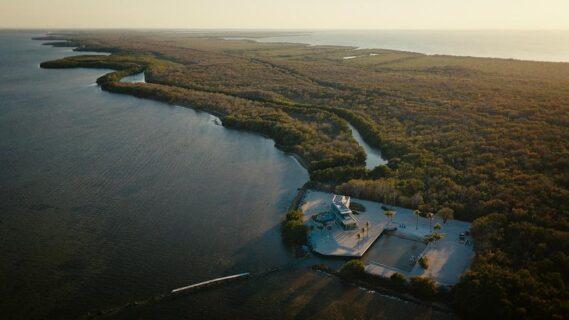
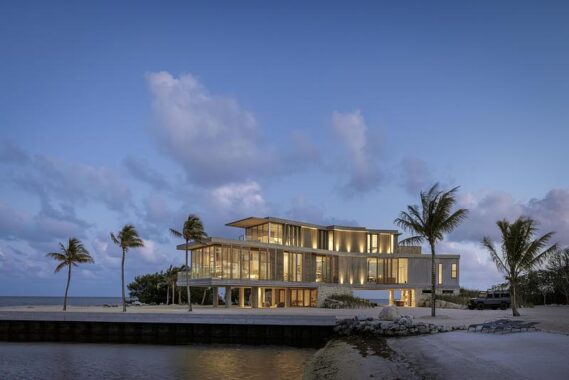
The property is surrounded by beach on three sides, and a tropical forest on the other.Photo credit: Kris Tamburello
The property is surrounded by beach on three sides, and a tropical forest on the other.
Photo credit: Kris Tamburello

Perched 10 feet above sea level on the Florida Keys coastline, the residence features a resilient concrete foundation, a dramatic 50-foot cantilever, and a sleek floating volume shaded by louvers—balancing modern aesthetics with climate resiliency. Its design includes passive cooling via floor-to-ceiling windows, natural light, and strategic shading, while the rugged exterior flows seamlessly into sophisticated interior spaces with striking material contrasts.
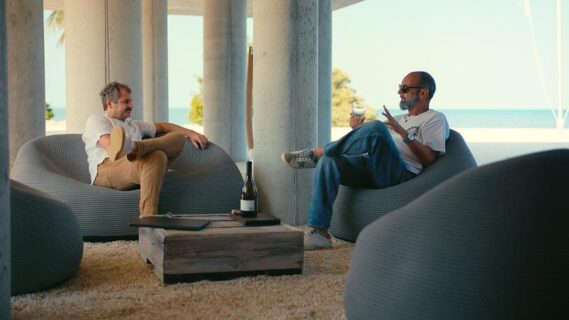
Max Strang, FAIA, talks with Will Van der Vlugt under the 50' cantilever.Photo credit: Ryan Lester, Architecture Sarasota
Max Strang, FAIA, talks with Will Van der Vlugt under the 50′ cantilever.
Photo credit: Ryan Lester, Architecture Sarasota

Produced by Ryan Lester, the documentary showcases how modernist principles are being reimagined for today’s environmental challenges. The Van der Vlugt Residence also boasts impressive sustainability stats, including 100% solar power for over 1,200 hours annually and 31 days of net-zero energy use.
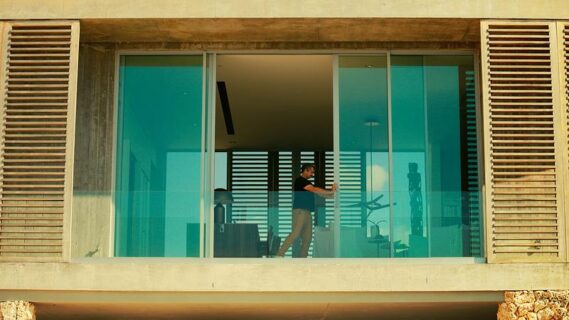
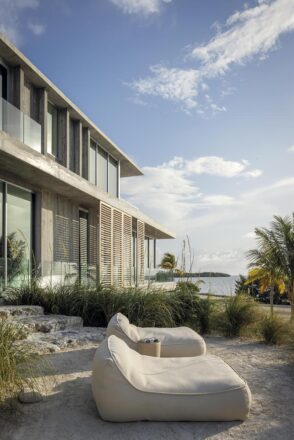
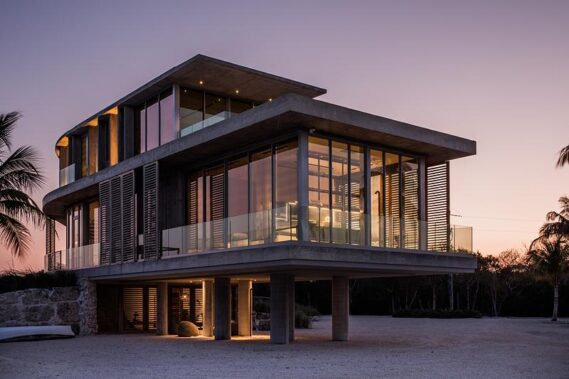
Louvered screens and overhangs help to shade and keep the house cool.Photo credit: Ryan Lester, Architecture Sarasota
Louvered screens and overhangs help to shade and keep the house cool.
Photo credit: Ryan Lester, Architecture Sarasota

As Max Strang, founder of STRANG, states, “Designing beautiful, resilient structures connected to Florida’s unique coastal environment is essential.” This project embodies that philosophy, blending modernist legacy with climate-aware innovation.

For more information on the documentary episode premiere, visit Open House Miami. For all other viewing options, visit Architecture Sarasota.
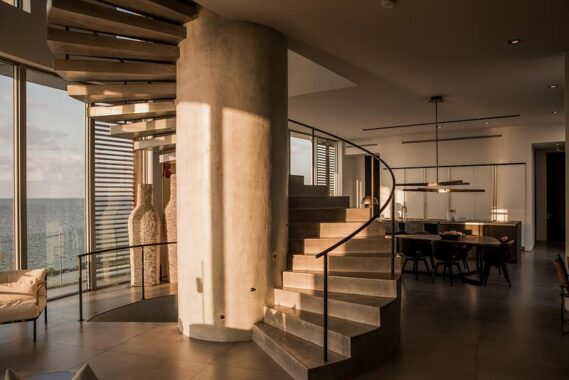
 

A spiral staircase acts as the "joint" connection of the home's curvature.Photo credit: Ryan Lester, Architecture Sarasota
A spiral staircase acts as the “joint” connection of the home’s curvature.
Photo credit: Ryan Lester, Architecture Sarasota
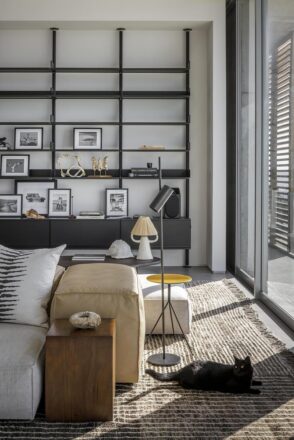
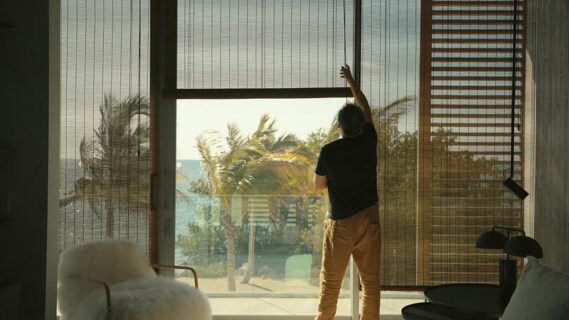
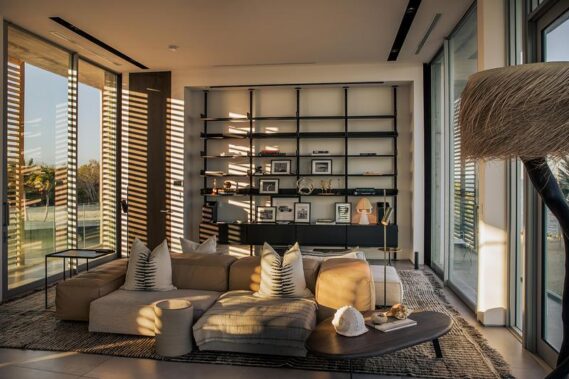
Floor to ceiling windows allow natural light to pour into the house, while strategically placed louvers help with shading and cooling.Photo credit: Ryan Lester, Architecture Sarasota
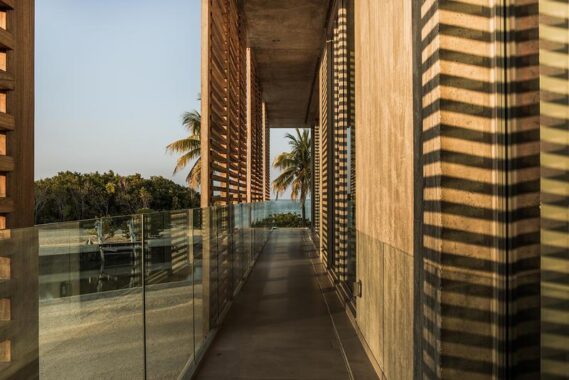
Floor to ceiling windows allow natural light to pour into the house, while strategically placed louvers help with shading and cooling.
Photo credit: Ryan Lester, Architecture Sarasota
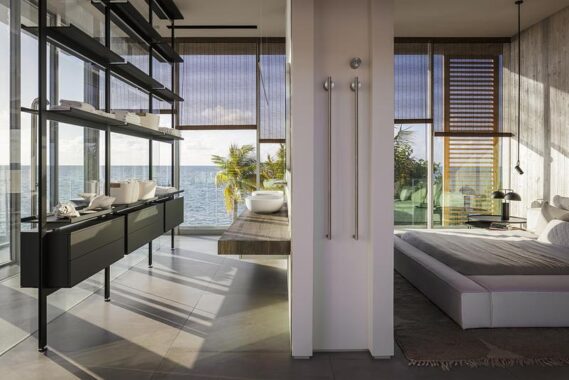
Interiors by Slokkers DesignPhoto credit: Kris Tamburello
Interiors by Slokkers Design
Photo credit: Kris Tamburello
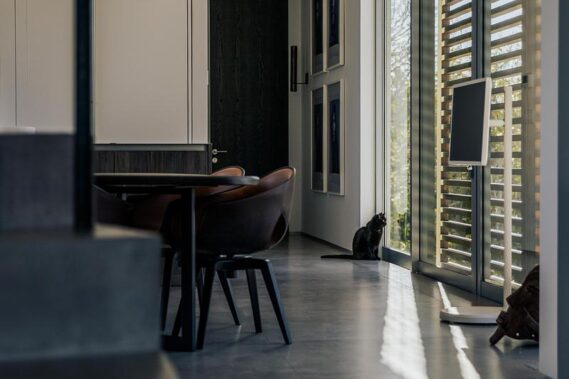
Interior view looking toward dining room.Photo credit: Ryan Lester, Architecture Sarasota
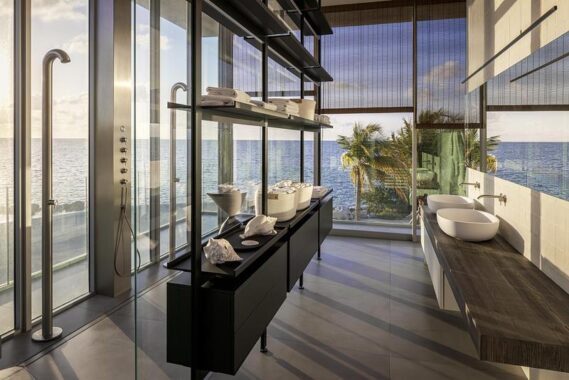
Interior view looking toward dining room.
Photo credit: Ryan Lester, Architecture Sarasota
A covered terrace overlooks the Atlantic Ocean.Photo credit: Ryan Lester, Architecture Sarasota
A covered terrace overlooks the Atlantic Ocean.
Photo credit: Ryan Lester, Architecture Sarasota
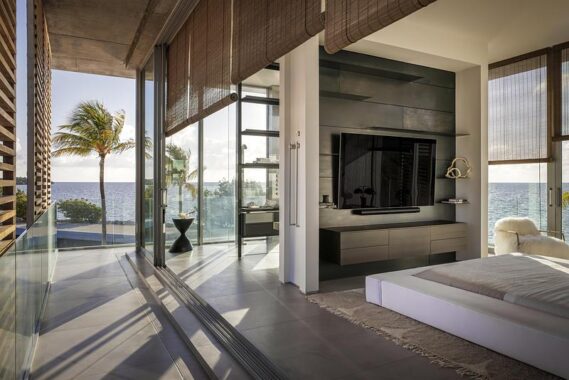
The owner’s primary suite is encased with sliding glass doors with views to the water, with metallic imprints of the board-formed concrete acting as a feature wall for the bed.Photo credit:
Kris Tamburello
The owner’s primary suite is encased with sliding glass doors with views to the water, with metallic imprints of the board-formed concrete acting as a feature wall for the bed.
Photo credit:
Kris Tamburello
The home's carefully framed views showcase the relatively untouched stretch of coastline.Photo credit: Ryan Lester, Architecture Sarasota
The home’s carefully framed views showcase the relatively untouched stretch of coastline.
Photo credit: Ryan Lester, Architecture Sarasota
View inside owner's primary bathroom.Photo credit: Kris Tamburello
View inside owner’s primary bathroom.
Photo credit: Kris Tamburello
The owner’s primary suite showcases views to the water from every angle.Photo credit: Kris Tamburello
The owner’s primary suite showcases views to the water from every angle.
Photo credit: Kris Tamburello
The home's distinctive curvature mimics the site's waterfront boundary.Photo credit: Kris Tamburello
The home’s distinctive curvature mimics the site’s waterfront boundary.
Photo credit: Kris Tamburello
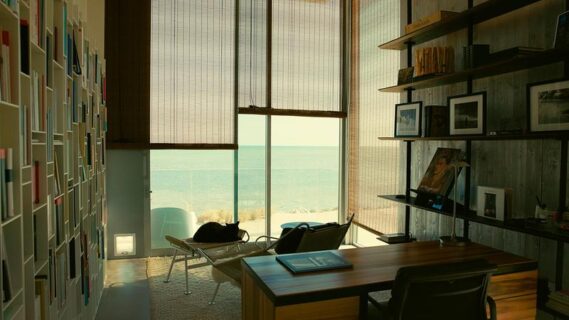
The home office provides a calming and soothing space for work and relaxation.Photo credit: Ryan Lester, Architecture Sarasota
The home office provides a calming and soothing space for work and relaxation.
Photo credit: Ryan Lester, Architecture Sarasota
The elevated foundation is supported by a cluster of concrete columns.Photo credit: Kris Tamburello
The elevated foundation is supported by a cluster of concrete columns.
Photo credit: Kris Tamburello
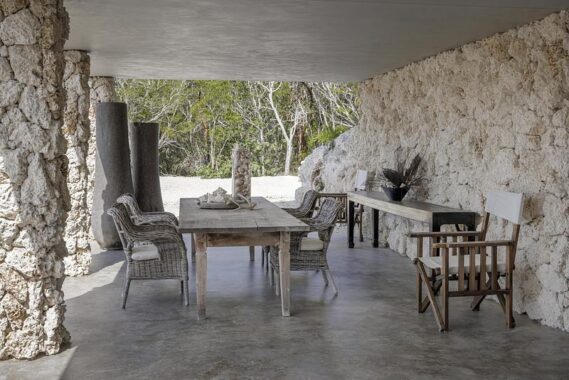
A covered outdoor dining and living area is nestled beneath the house.Photo credit: Kris Tamburello
A covered outdoor dining and living area is nestled beneath the house.
Photo credit: Kris Tamburello
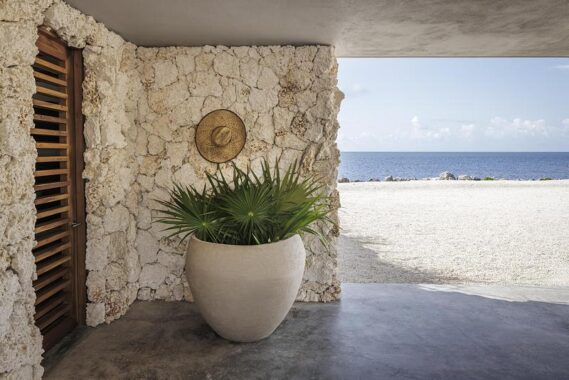
A breezeway or "outdoor foyer" acts as the home's main entrance.Photo credit: Kris Tamburello
A breezeway or “outdoor foyer” acts as the home’s main entrance.
Photo credit: Kris Tamburello
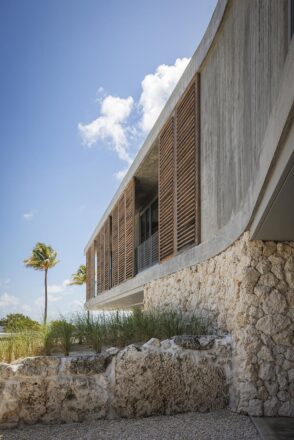
Wood slats offer extra protection against hurricane force winds.Photo credit: Kris Tamburello
Wood slats offer extra protection against hurricane force winds.
Photo credit: Kris Tamburello
Board-form concrete is used on the exterior of the raised home.Photo credit: Ryan Lester, Architecture Sarasota
Board-form concrete is used on the exterior of the raised home.
Photo credit: Ryan Lester, Architecture Sarasota
The home's elegant design serves a functional purpose. Given its fragile location, the STRANG team elevated it ten feet off the ground to account for sea level rise and potential storm surge.Photo credit: Ryan Lester, Architecture Sarasota
The home’s elegant design serves a functional purpose. Given its fragile location, the STRANG team elevated it ten feet off the ground to account for sea level rise and potential storm surge.
Photo credit: Ryan Lester, Architecture Sarasota
Impact glass is used for the floor-to-ceiling windows, built to withstand hurricane force winds.Photo credit: Ryan Lester, Architecture Sarasota
Impact glass is used for the floor-to-ceiling windows, built to withstand hurricane force winds.
Photo credit: Ryan Lester, Architecture Sarasota

Spread the love!