Chris Chibnall on Camelot, Torchwood, and Building Myth for a Modern Audience
The showrunner and head writer behind Starz's Camelot talks stripping the legend back to its roots, making Merlin a political spin doctor, and why the dark ages are a writer's paradise.
From the Vault · 2011
This is an archival piece from the Premier Guide Miami collection. The coverage, context, and details reflect the time it was originally published.
Chris Chibnall said it plainly: "You're world building. And I think particularly with this where it is in the history it is absolutely myth -- so open to…" — and Premier Guide Miami was in the room when it happened.
Chris Chibnall was the only writer other than the show's creators to write for both series of the BAFTA and double International Emmy award-winning BBC One police drama Life on Mars (2006-2007). In 2005, Chibnall became head writer and co-producer of science-fiction drama Torchwood, a spin-off from the long-running Doctor Who, which premiered on BBC Three in October 2006 to a then record-breaking audience for a digital channel in the UK.
The series went on to win Best New Drama at the 2007 TV Quick Awards and Best Drama Series at the BAFTA Cymru 2007 awards. Chibnall wrote eight episodes during the first two seasons, including both series finales, and the premiere episode of season two, working closely with Russell T Davies across all aspects of the show's production.
While working on Torchwood, Chibnall also penned the 2007 episode 42 for the third season of Doctor Who. In 2007, Dick Wolf and Kudos Film and Television selected Chibnall as the launch showrunner on ITV1's Law & Order: UK. Camelot airs every Friday on Starz at 10:00 pm Eastern/Pacific.
PREMIER GUIDE MIAMI: What was it about this material that really appealed to you?
CHRIS CHIBNALL: I think growing up as a Brit, Arthur and Merlin and Camelot and the idea of it is just embedded in the culture and kind of in your souls growing up. The King Arthur legend is alongside Robin Hood as those great British folktales and myths and icons. And you go and visit Tintagel and all these great sites. So it's a once-in-a-generation chance to tell that story for a new audience and to refresh it and give a kind of version of it. It's one of the great myths. It was an absolute no-brainer to do and to tell. And the joy of doing it is it's kind of infinite in its possibilities, so for a writer it's a real joy and a gift.
PREMIER GUIDE MIAMI: What was your approach to Camelot?
CHRIS CHIBNALL: First of all I had to approach it in the sense of take nothing for granted. There have been so many different versions of the legend and of Camelot. So what I wanted to do is strip it all back and go back to the beginning -- tell the story of Arthur from the very first meeting between Merlin and Arthur, and really try to make it feel real. Going back to the source material of Malory, which is kind of the most complete version of the myth in many ways, and asking: here are the events and here are the stories that we know, but what might it have been like if you lived through them? How would it be to be Arthur and be 19 and just be quite happy and comfortable in your life and then this mad shaven-headed man turns up at your house and says you're adopted and by the way you're the king?
CHRIS CHIBNALL: The conversations that Joe and I had were absolutely not going for the kind of stock received way of portraying Merlin, but more about asking what does he want? Why is he so keen for Arthur to get to the throne? And then taking that into the dramatic and going: what will it be like to have those powers? Because nothing in life comes without a cost and nothing comes without consequences. The big thing was making sure that the show was full of character, full of emotion, and that every decision and every action had costs and consequences.
PREMIER GUIDE MIAMI: What surprised you as Camelot developed?
Love Miami covers the city's conversations — the interviews, the creative voices, the tastemakers and innovators who define South Florida's cultural identity. This is the pillar where Miami speaks for itself.
CHRIS CHIBNALL: What surprised me -- and what delighted me -- was the level of cast we managed to bring in and get to commit to the show. And then once you've got actors of this caliber in place, it becomes a dialogue. You're putting stuff down and then you're discussing it in rehearsal, but then you're also seeing what comes through in the dailies. And you're molding and shaping the characters as you go along. It becomes a response to what's on screen. The characters take very interesting developments and you refine them because you see a little emphasis in a performance in a particular scene and you think, oh, there's a whole facet and a whole emotional storyline there I want to follow. That was probably the biggest thing. And that was the delight of it.
PREMIER GUIDE MIAMI: All the epics and classics are being transformed into stronger and more unpredictable stories. How different is Camelot from the original story and what changes have you made to suit the 21st century audience?
CHRIS CHIBNALL: Well there's so many different versions of the myth. There really isn't one definitive version of the story. And that's the joy of myth in a way -- it's re-invented every generation to resonate with the concerns of that particular generation of people. The thing that I focused on really was making sure that everything we did and every decision we made was emotionally motivated. For me, what was interesting and what made it relevant was: how on earth do you become a ruler? And if you're a leader out there promising hope, how do you then deliver on that promise? How do you bring something as abstract as hope into existence and deliver it for people? It's not hard to find modern resonances and relevancies. It's all there in the great material.
CHRIS CHIBNALL: The big decision really was making Merlin a very clear king maker -- more of a spin doctor than an out-and-out wizard. Joe and I ditched the pointy hat and the cloak and the staff and the beard in our very first discussion. So Merlin is much more of a Donald Rumsfeld / Karl Rove type character, which changes the emphasis of things immediately. The story in this first season is really a tale of two houses -- a brother and a half-sister who both want the crown, both have equal legitimacy to it, and how they go about trying to get it.
PREMIER GUIDE MIAMI: Starz is known for more realistic portrayals showing the sex and the violence. How far do you go and does it free you as a writer to fully develop your work?
CHRIS CHIBNALL: Camelot is a story about passion in both the personal and the political. The political aims are brought down by personal passions all the way through the myth. And what's great is we're able to show that. I don't ever want to be gratuitous for the sake of being gratuitous, but when it serves the stories and serves the characters it's nice to be able to do that realistically and with credibility. It's another good tool to have in the toolbox.
PREMIER GUIDE MIAMI: What kind of pace is the story going over the ten episodes?
CHRIS CHIBNALL: One of the key things we wanted to do in the first season was really set the foundations. There's no rush with the story. When I first spoke to Chris Albrecht at Starz about it, one of the things he was very strong about was: take your time, don't rush. We've got time. And really what he wanted to see was how all these characters come into this world. So that was great permission from the boss to really spend time with people. You'll see a lot of the iconography this year -- the Lady in the Lake, the Sword in the Stone, the very beginnings of a round table. But this season is really about bringing together the group of people and the building of what will become the legendary Camelot. I wanted to tell the story of how Camelot is built and earned and achieved through blood and sweat and tears and a lot of mud.
For more upcoming events across South Florida, visit the Premier Guide Miami Events Calendar .
The PGM Edit
Chris Chibnall on camelot — this is the kind of conversation Premier Guide Miami was built to have. Follow us for more Love Miami.
Premier Guide Miami
The Live · Love · Play Dial
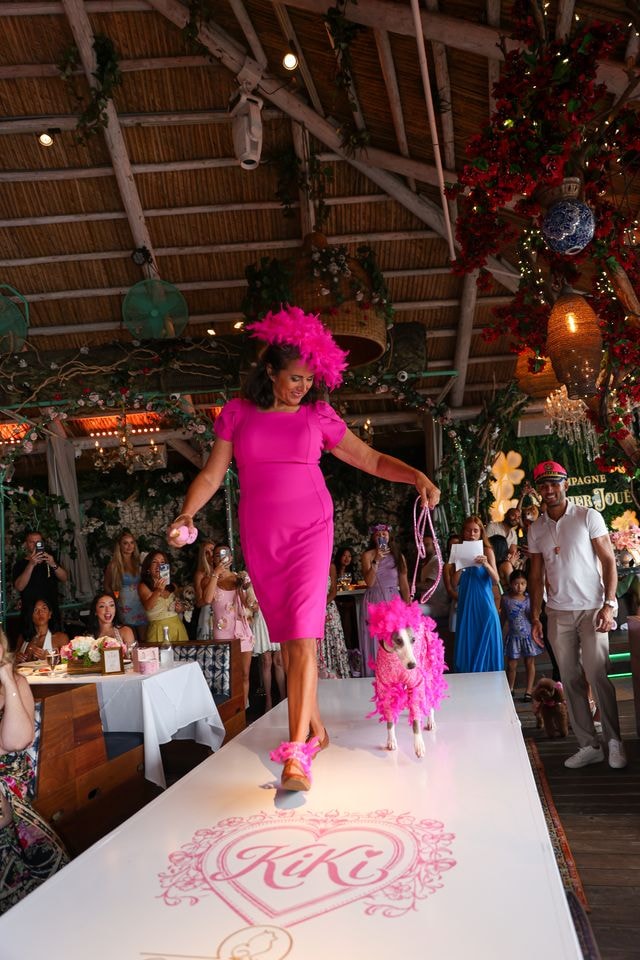

14th Annual South Beach Seafood Festival at Lummus Park, October 21–25, 2026
The 14th Annual South Beach Seafood Festival returns to Lummus Park on Ocean Drive for five days of fresh seafood, celebrity chefs, live music, and the best of Miami Beach's culinary scene, October 21–25, 2026.

FLIBS 2026: Floating Pickleball, Helicopter Shuttles, and 50+ Boat Debuts at the World's Largest In-Water Boat Show
The 67th Annual Fort Lauderdale International Boat Show runs October 28 through November 1 across six locations. This year adds a floating pickleball court, a helicopter shuttle from FLL, VIP cabana clubs, and a FOX Sports Best of Show competition. Tickets online only at flibs.com.

F1 on Water: The E1 World Championship Returns to Biscayne Bay for Its Season Finale — Tom Brady, LeBron, and Will Smith Are Team Owners
The UIM E1 World Championship — the world's first all-electric raceboat championship — brings its season finale to Biscayne Bay at the Miami Seaplane Base on November 13–14. Celebrity team owners include Tom Brady, LeBron James, Will Smith, Steve Aoki, Rafael Nadal, Marc Anthony, and Didier Drogba.

Roberto Carlos Bought Two Units. A Race Car Driver Bought Another. Florida's Luxury Residences Are Being Designed for Athletes.
From boxing studios and cold plunges to F1 simulators and floating pickleball courts, Florida's newest luxury residential towers are being built around the habits of professional athletes — and the pros are taking notice.
Independent.
·Unsponsored.
·Always Free.
Premier Guide Miami has never accepted payment for editorial coverage. Our story →