Children of 9/11: Caitlin Langone and Executive Producer Janice Sutherland
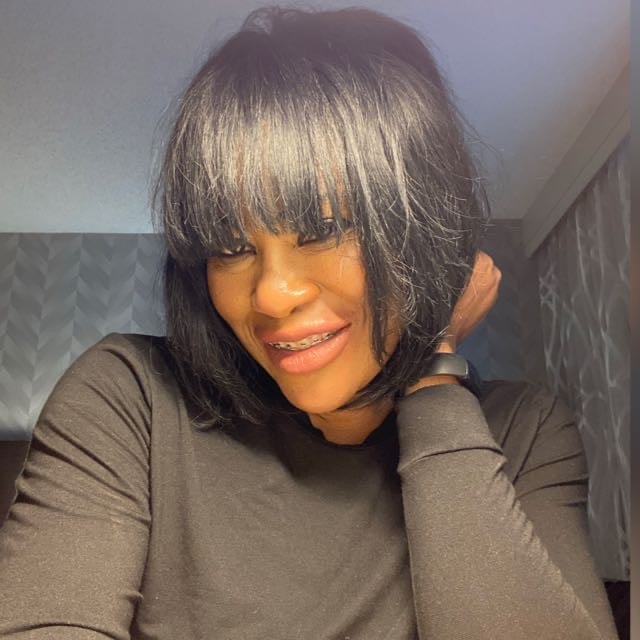
Ten years after September 11th, 2001, the documentary Children of 9/11 gave a voice for the first time to the young people directly affected by that fateful day. Premier Guide Miami spoke with Caitlin Langone — whose father, a police officer and volunteer firefighter, was caught up in the rescue — and executive producer Janice Sutherland of Darlow Smithson Productions.
From the Vault · 2011
This is an archival piece from the Premier Guide Miami collection. The coverage, context, and details reflect the time it was originally published.
They said it plainly: "If you don't tell your story — especially with something like this — somebody else is going to tell it for you. And you …" — and Premier Guide Miami was in the room when it happened.
Ten years after September 11th, 2001, Children of 9/11 gave a voice, for the first time, to the young people directly affected by that fateful day. More than 3,000 children lost a parent that day, and some were not yet born — they were still in the womb when the towers collapsed. The documentary follows eleven children from six families across America over the course of a year. Produced by Janice Sutherland at Darlow Smithson Productions, the film aired on NBC (one-hour version) and Channel 4 in the UK (90-minute version). Premier Guide Miami spoke with executive producer Janice Sutherland and Caitlin Langone, 22, whose father — a police officer and volunteer firefighter in Queens — was caught up in the rescue.
PREMIER GUIDE MIAMI: How does 9/11 still affect your life?
CAITLIN LANGONE: It affects me in the sense of my perspective. When I was going through high school, things that may strike my peers as an end-of-the-world scenario — "Oh, I lost my phone" or "My car broke down" — it gave me a good sense of perspective where that wasn't my end-of-the-world scenario. My worst-case scenario is going to be somebody dying. So when I hear stuff like that, it allows me to take a step back, breathe, and realize this is not the end of the world. There's a solution to this that I can handle. If I need help, I can call mommy. This is not the worst thing that can happen to me.
PREMIER GUIDE MIAMI: Have you gained a better understanding of who your father was?
CAITLIN LANGONE: There are so many stories. The great benefit of daddy being in the NYPD and being involved as a volunteer firefighter is your family also becomes indoctrinated into the brotherhood. So once daddy passed away, I was never really alone. It was like having 20 or 30 brothers and uncles who could all tell you stories about daddy — "Tommy used to do this" or "Your father would say things like this" or "When he was at a meeting, he would feel like this" or "When your father entered a room, you could just feel it." Awesome stories that help fill in all the parts of daddy that I didn't necessarily get to know, mostly because I was young. He loved to teach — that was his greatest passion. He loved dogs like me. And he was actually a really funny guy. Through the stories it still feels like he's here in a way, because there are so many people who know him and are not going to forget him.
PREMIER GUIDE MIAMI: Janice, how did you approach each child's story without losing the emotional weight of what happened?
JANICE SUTHERLAND: I really spent a lot of time with each of them discussing what had happened to them and what happened in the years since. Although there were differences between them all, a lot of them had very common ground — they'd gone through the same problems with their peers at school, people treated them differently. One thing that came up very strongly was this abiding sense of responsibility for the parent left behind. Incredible responsibility — they didn't want to do anything on earth to upset that parent, and the fear of what would happen if they lost that parent too. Although they all came from different backgrounds with different things to say, there was a thread running through them all: this common experience of losing someone very close to them at a very young age.
PREMIER GUIDE MIAMI: Janice, why did a British company become so interested in doing a special on 9/11?
JANICE SUTHERLAND: Because it's a very good idea. And I have to put my hand up and say it wasn't my idea. Somebody initially approached the Director of Darlow Smithson, Tom Brisley, and suggested doing this. "No one's ever looked at the subject of the children — why don't we think about doing a film about the children?" And the British company, Darlow Smithson, it's a Channel 4 production, and they jumped at the idea. So that was my brief — could you make this film? Would you be able to get the children to talk about it? Would the parents be happy about the children talking about it? And maybe it helps in a sense because it wasn't an American company — we were coming at it from a British perspective. We tend to get longer-form documentaries, 90-minute documentaries. So we could give the time to the subject. The Channel 4 version is 90 minutes long, whereas the NBC version is an hour long.
PREMIER GUIDE MIAMI: How did you go about finding the families?
JANICE SUTHERLAND: Initially I went to one camp — Camp Haze — which just before 9/11 has 200 kids that go there. Most of them are children of 9/11 but some aren't. I spent a week there just hanging out with the kids and talking to them. Initially they kind of looked at me and thought, "Who is she, what does she want, why is she here?" We went walking with them, played games, just got talking to them individually. At the end of the week quite a few of them came forward and said, "We'd like to take part in this." And then from there I followed a few of those up, but we also started trying to find other families via old press stories, victim support groups — casting it very wide. Some people initially agreed and then on reflection withdrew. But a lot of them thought, "Yeah, I feel I might tell my story" — and the children's perspective on 9/11 tends to have been overlooked.
PREMIER GUIDE MIAMI: What made you want to be a part of this special?
JANICE SUTHERLAND: I talked her into it. CAITLIN LANGONE: Yes. Five or six years ago I was still in high school. News Day had approached us about wanting to do the children's perspective. My motivation then and still now was — as a young person watching the reaction of the country post-9/11, I noticed there were a lot of victims groups that became prominent. And they would say, "We represent the 9/11 families. The 9/11 families want this." And I always felt like, "Well, no actually. You're not representing me or my family. Our views are quite a bit different." So I felt like the documentary was my opportunity to tell my story in my own words. This was me saying it how I wanted to say it. I always figured if you don't tell your story — especially with something like this — somebody else is going to tell it for you. And you might not like how they tell it.
PREMIER GUIDE MIAMI: And what have you been up to lately, Caitlin?
CAITLIN LANGONE: Well, I graduated from SUNY New Paltz just this August. And I am working at a PetSmart in Kingston as a pet trainer for the dogs. I'm quite pleased that I graduated and managed to find a job. You know how bad it's been.
Love Miami covers the city's conversations — the interviews, the creative voices, the tastemakers and innovators who define South Florida's cultural identity. This is the pillar where Miami speaks for itself.
PREMIER GUIDE MIAMI: Caitlin, can you talk about the special bond that you have with other children who lost parents during 9/11?
CAITLIN LANGONE: I have a bond with my brother and my cousins because we were always kept together — the way our family works. But I was never the kind of person who would identify myself by one thing. A girl in my grade had a father who worked for Cantor Fitzgerald and was on the 110th floor of the North Tower. People sort of thought we would become friends, but we never had anything in common beforehand. And just because we went through this one situation, we still didn't have anything in common outside of losing our fathers. So I was never motivated to go seek out other 9/11 kids and become their friend — that's the short answer.
PREMIER GUIDE MIAMI: What type of impact did this project have on you compared to other real-life stories you've chronicled?
JANICE SUTHERLAND: It just gave me a greater understanding of children and how resilient they are. I'm not sure if I'd been in that situation myself how I would have coped with it. I'm just astonished by how these children have coped — that they have come through it and tried to get on with their lives. I knew it would be a very sad film. I was hoping there was going to be some message about how children deal with death. And I would say remarkably well. The trouble we have as adults is that we don't know how to deal with death, we don't know how to talk to children about it. And often the children are left on their own trying to figure their own way out — or in lots of cases they're the ones helping their parents out. Maybe they've got a lot to teach us.
PREMIER GUIDE MIAMI: So in a sense children are more resilient than we give them credit for.
JANICE SUTHERLAND: Yeah. Absolutely. And more pragmatic. I remember Terry Strada — the parent of Thomas, Kaitlyn, and Justin Strada — saying that after Tom, her husband, died, Tommy said, "Why can't we just all die? We all go to heaven. We'll all be there together. And there won't be a problem. So what's the big issue?" And she said, "That's how children think. They've got very practical solutions to things." He'd have this conversation with her in the supermarket aisle at the checkout. I was quite astonished by how resilient they were and the solutions they would come up with.
PREMIER GUIDE MIAMI: What do you most hope that viewers will take away from watching this?
CAITLIN LANGONE: I just hope that people never forget. That's what we're promised, so to speak. I hope it gives them a better understanding. I hope it makes it more personal for them. Friends I've made after the fact, once I told them I was a 9/11 victim, said to me, "I felt bad about it before but I never really had a connection to it. After I met you, it suddenly became personal." So I hope by seeing it, people feel a more personal connection — that there were real people affected and are continued to be affected. But you don't have to coddle us. You don't have to treat us with kid gloves. You don't have to feel awkward about it. Just if we want to talk, just listen. That's what we need.
PREMIER GUIDE MIAMI: There are quite a few 9/11-themed programs on all the different networks. Will you watch any of them?
CAITLIN LANGONE: I have watched programs in years past. I believe National Geographic had a special last year where they interviewed Rudy Giuliani — I would watch that. I will not be watching the interview with President Bush because I'm not a fan. A&E has the I Survived series, so they have a special coming out — I'm not going to watch that. I will watch my documentary again just because I want to see the difference between the 90-minute versus the hour version. But for the most part I'll probably just not be watching the Bush interview and the A&E special. That's about it.
PREMIER GUIDE MIAMI: Janice, did the children have any opportunities to meet each other while the filming process was going on?
JANICE SUTHERLAND: No, they didn't actually. I was hoping to get some of them together near the end, but that didn't quite work out. They're all very geographically dispersed. But I'm hoping now that when the program goes out, they will get together. I know that Caitlin has expressed an interest in meeting up with Rodney and Akina, and that would be great if that happened.
PREMIER GUIDE MIAMI: What was your initial reaction to the different views between the parents and the children?
JANICE SUTHERLAND: It is very interesting talking to parents who had obviously lived through it on the day — had been on the phone to the husband or the mother they lost — and then speaking to the children who most of the time had no idea what was going on. You had this bizarre sort of parallel world: the parents knew what was happening, trying desperately not to let the kids know, and the kids being just bewildered and confused. And then afterwards, one or two of the kids were very angry about that — very angry that they didn't know what happened to their father or their mother that day. But you've got to think about what was happening at the time. Tommy Strada, the 17-year-old boy, didn't find out for weeks that his father died because his mother wanted to make absolutely sure he didn't come up on any of the lists. So he spent a week just hoping. He understood why his mother had done it, but very difficult.
For more upcoming events across South Florida, visit the Premier Guide Miami Events Calendar .
The PGM Edit
The conversation continues. Premier Guide Miami covers the people, the ideas, and the moments that define South Florida. This is Love Miami.
Premier Guide Miami
The Live · Love · Play Dial


Major Lazer Is Headlining Faena's Art Basel Music Series — and Chase Sapphire Reserve Cardholders Get a Private Dinner
The Faena Art Music Series returns December 2 with Major Lazer headlining and Richie Hell opening. Chase Sapphire Reserve cardholders get access to a private sunset cocktail hour, an exclusive dinner called 'Transatlantic Express: A Shared Table,' and a VIP area. Tickets go on sale October 27.
You're the Jury: This Interactive Courtroom Show at the Manuel Artime Theater Puts You in the Deliberation Room
The Jury Experience — a 60-minute live theatrical show by Fever where the audience becomes the jury — is running at the Manuel Artime Theater in Miami through the end of the year. No two performances are the same because the room decides the verdict.

Brightline's Buzzer Beater Is Back for the Miami Heat Season — Skip the Traffic, Catch the Game
Brightline's game-day train service returns for the 2026–27 Miami Heat season, connecting fans from Orlando, West Palm Beach, Boca Raton, Fort Lauderdale, and Aventura to MiamiCentral Station — a 15-minute walk from Kaseya Center. The Heat open at home October 21 against the Timberwolves.

The Fort Lauderdale Dining Guide: Seven Restaurants Worth Building Your Trip Around
From a gondola dinner on the Las Olas canals to a Michelin Guide steakhouse, a coastal Italian chophouse on the Intracoastal, and a Greek estiatorio with house olive oil from the village — Fort Lauderdale's table is better than it's ever been.
Independent.
·Unsponsored.
·Always Free.
Premier Guide Miami has never accepted payment for editorial coverage. Our story →