Art Basel Miami Beach 2026: Five Editorial Trends That Define This Year's Fair
Nova's Global South argument, Survey's art-historical reappraisals, Kabinett's institutional depth, Positions' cross-institutional moment around Anina Major, and Zero 10's confirmed 19-project digital roster — here is the editorial case for what matters at Art Basel Miami Beach 2026.
Part of our ongoing curation of what it means to live, love, and play in the Magic City.
Art Basel Miami Beach 2026 runs December 4–6 (public days), with Preview Days December 2–3. The fair spans 286 galleries from 40 countries across six sectors. Here is the editorial case — not the press release version, but the actual argument — for what is worth paying attention to this year.
1. Nova = The Global South Moment
The Nova sector, dedicated to work made within the last three years, is making the most coherent geographic argument of any sector at the fair. Gallery 1957 (Accra/London), kó (Lagos), Silverlens (Manila/New York), Proyectos Ultravioleta (Guatemala City), and Galeria Marilia Razuk (São Paulo) are not simply representing their regions — they are collectively arguing that the center of gravity in contemporary art has shifted. The work in these booths is not responding to a Euro-American conversation; it is generating its own. Gallery 1957's presentation of West African artists working in painting and sculpture, kó's Lagos-based practice, Silverlens's Southeast Asian roster — these are not peripheral additions to the fair. They are the fair's most forward-looking section. The question Nova is asking in 2026 is not "what is happening in the Global South?" but "why did it take this long for the fair to reflect what has been happening for decades?"
2. Survey = Art-Historical Reappraisals
The Survey sector is doing serious work this year. The pairing of Gego and Eugenio Espinoza — two Venezuelan artists, a generation apart, both working in geometric abstraction — is a deliberate act of art-historical positioning. Gego's Reticuláreas are among the most important works produced in Latin America in the 20th century; Espinoza's practice extends that lineage into questions of surface and repetition. Together, they make an argument about a tradition that has been systematically undervalued by the North American market. Yayoi Kusama at Omer Tiroche reframes her early New York work as art history rather than brand extension. Paul Signac at Pavec argues for Neo-Impressionism as a practice of genuine optical intelligence rather than a theoretical exercise. Survey in 2026 is not a nostalgia section. It is an argument about what the 20th century actually produced.
3. Kabinett = Institutional Depth
The Kabinett sector's curated-within-booth format is being used this year for artists who reward sustained attention rather than quick scanning. Olafur Eliasson's perceptual installations require the controlled conditions that the enclosed Kabinett space provides. Cecily Brown's dense, layered paintings change as you spend time with them — they are not works that yield to a thirty-second encounter. Carlos Cruz Diez's Physichromies generate color through the interaction of light, movement, and the viewer's position; they cannot be understood from a photograph. Mildred Howard's material investigations of memory and the African American experience accumulate meaning through detail and relationship. What connects these four presentations is a shared resistance to the logic of the fair as a scanning device. Kabinett in 2026 is a protected space for work that requires something from the viewer.
4. Positions = The Cross-Institutional Moment
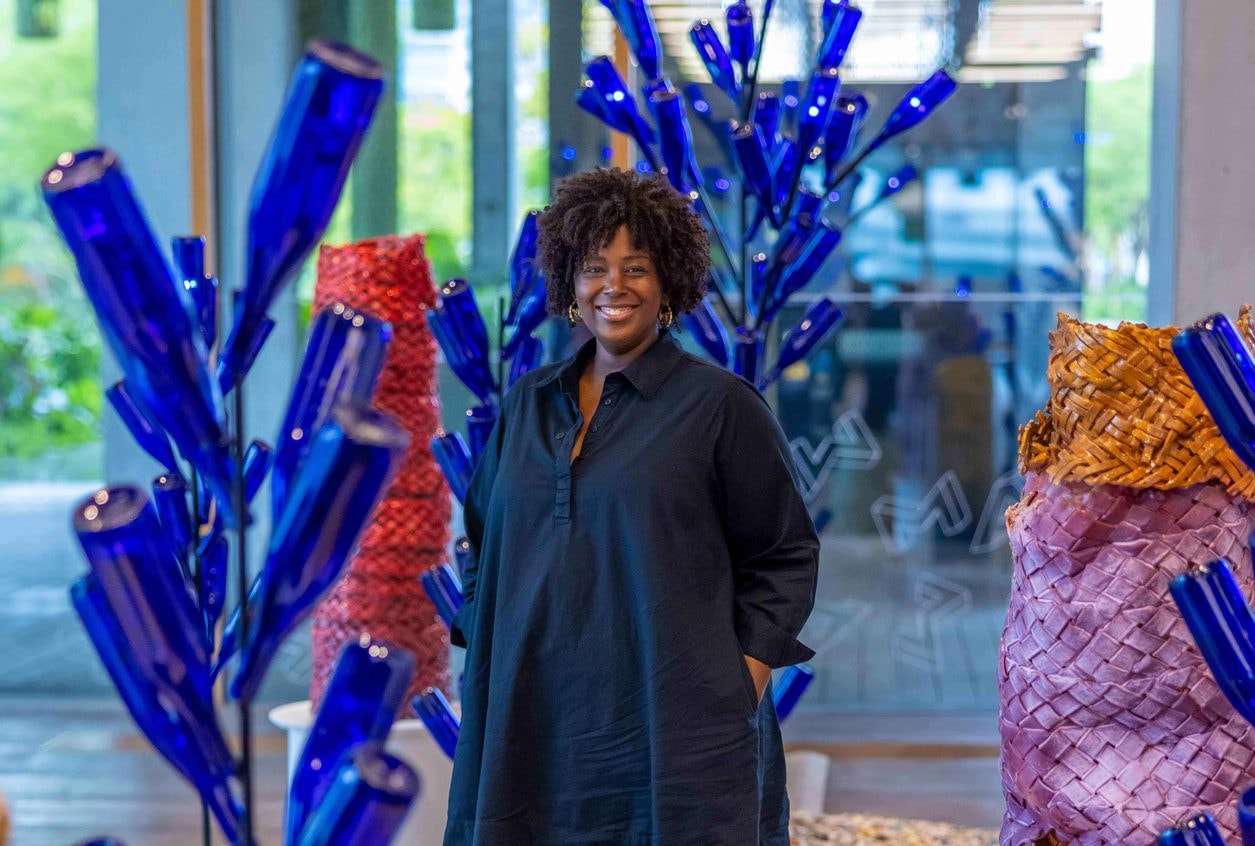
The most significant convergence of the fair week is Anina Major at TERN Gallery in Positions, while simultaneously on view at PAMM in the Sacred Mangrove exhibition. Major is a Bahamian artist whose ceramic and textile works investigate the mangrove ecosystem and the entanglement of human and non-human life in Caribbean environments. The TERN/PAMM convergence is not accidental — it is the result of deliberate coordination, and it reflects a more sophisticated model for introducing artists from underrepresented regions to the international market. The museum show provides institutional legitimation; the fair presentation provides market visibility. Together, they do something neither could do alone. This is a model other galleries and institutions should study.
5. Zero 10 = 19 Projects, Fully Confirmed
The Zero 10 sector, dedicated to digital and time-based art, is presenting 19 projects in 2026 — the largest roster in the sector's history at Miami Beach. The complete list is confirmed and matches what was announced at the fair's press preview. The sector continues to grapple with the fundamental challenge of presenting digital work in a fair context: how do you create the conditions for genuine encounter with work that is designed for screens, for networks, for distributed viewing? The best Zero 10 presentations this year are the ones that use the fair's physical space to create conditions that cannot be replicated online — immersive installations, works that respond to the viewer's presence, pieces that require the specific light and scale of the convention center floor. The sector is still finding its format, but 19 projects is a serious commitment, and the quality range is higher than in previous years.
The Synthesis
What these five trends share is a common direction: away from the Euro-American center, toward work that requires more from the viewer, toward art-historical arguments that the market has not yet fully priced, toward institutional models that are more sophisticated than the simple gallery-to-collector pipeline. Art Basel Miami Beach 2026 is not a revolutionary fair — it is still, fundamentally, a commercial event, and the majority of what is on the showfloor is work made for collectors who want beautiful objects for beautiful rooms. But the editorial argument being made in Nova, Survey, Kabinett, Positions, and Zero 10 is more interesting than the fair has been in several years. That is worth paying attention to.
The PGM Edit
Nova's Global South argument, Survey's art-historical reappraisals, Kabinett's institutional depth, Positions' cross-institutional moment around Anina Major, and Zero 10's confirmed 19-project digital roster — here is the editorial case for what matters at Art Basel Miami Beach 2026.
Premier Guide Miami
The Live · Love · Play Dial


Art Basel Miami Beach 2026: Survey Is Doing Serious Art-Historical Work This Year
Gego alongside Eugenio Espinoza, Yayoi Kusama at Omer Tiroche, Paul Signac at Pavec — the Survey sector at Art Basel Miami Beach 2026 is making a sustained argument about what the 20th century actually produced.

Art Basel Miami Beach 2026: Kabinett Is Using Its Format for Artists Who Reward Sustained Attention
Olafur Eliasson, Cecily Brown, Carlos Cruz Diez, Mildred Howard — the Kabinett sector's curated-within-booth format is being deployed this year for work that genuinely requires more than a passing glance.
Art Basel Miami Beach 2026: Positions and the Cross-Institutional Moment Around Anina Major
Anina Major at TERN Gallery in Positions while simultaneously in PAMM's Sacred Mangrove show is the most significant convergence of the fair week — and a case study in how institutional and commercial platforms can amplify each other.
Art Basel Miami Beach 2026: Nova Sector Signals a Global South Moment
The confirmed Nova list — Gallery 1957, kó, Silverlens, Proyectos Ultravioleta, Galeria Marilia Razuk — reads as a deliberate argument about where contemporary art is being made.
Independent.
·Unsponsored.
·Always Free.
Premier Guide Miami has never accepted payment for editorial coverage. Our story →